From Fatigue to Forward Motion
Dr. Rene Ribant, Ed.D. | January 23, 2026
My career in education began in 1997, when I was 22 and hired to teach high school English and theatre. At the time, classroom technology was limited to computers used for word processing. There was no email, no internet access during class, and no platforms like Google Classroom. Lesson planning was a wholly teacher-driven endeavor. Digital plagiarism tools did not yet exist, but academic dishonesty did. Copied encyclopedia passages and recycled sibling essays were common.
In 1997, the only real requirement for high school teachers was to deliver content, but I arrived in the profession knowing that improvements and change were necessary; and teachers could be at the forefront of that movement. This mindset shaped--and continues to shape--my leadership instincts. Little did I know then that my career would intersect with two transformative accelerants: COVID-19 and the rapid rise of AI. COVID revealed that education is capable of seismic reinvention when the world demands it. And now with AI, the world is demanding it again.
When Change Became Unavoidable
COVID-19 arrived during my first year as an assistant principal and gave me a front-row seat to the operational complexity of systemic change. I saw the scheduling pivots, the policy rewrites, the compliance pressures, the communication bottlenecks, and the fragile human systems trying to stretch themselves around a crisis they were never built to withstand.
The moment felt defined by disruption and uncertainty, but it also revealed possibility. I believed we might finally begin to shift away from the industrial-era model of teaching and learning, the one built for efficiency, uniformity, and compliance rather than individuality, agency, and human-centered design. But when the virus receded, the system largely reverted to what it had always been. Reinvention slowed to renovation, then to inertia. The urgency that once made change feel unavoidable dissolved the moment it was no longer required. It was a stunning loss of momentum and one of the most significant missed opportunities in modern education.
We attributed much of this experience to burnout. Yet the truth is that educators were burned out long before the pandemic began. COVID-19 did not create the exhaustion; it accelerated it and magnified the cost of ignoring it. When schools returned to normal, many educators did not. Large numbers left during the pandemic and more followed once the crisis quieted. Those who remained were described as “survivors.”
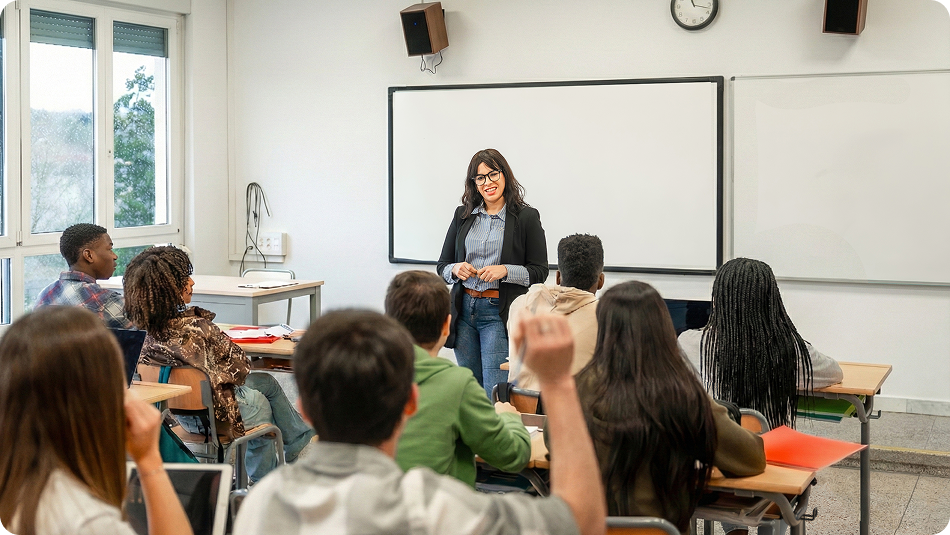
Beyond Burnout: Fatigue
Educators are not still here because they are immune to exhaustion; we’re here because we chose to stay despite it. What lingers now is not burnout, but something less visible and more pervasive: fatigue. It is a slow depletion delivered through compounding stressors, shifting expectations, emotional labor, and the daily friction of systems that demand more from educators than they were ever designed to carry. This fatigue is not rooted in curriculum or instruction, but in the constant negotiation between self-preservation and the expanding responsibility of ensuring and enhancing student well-being. Educators are not tired because the content is hard. We are tired because the context is heavy.
I don’t have easy answers, but I do have conviction that we must choose to be part of intentional and meaningful change. The solutions must be structural, human-centered, and sustainable. One promising piece of that redesign is career readiness and exploration. When students see a real, attainable future connected to their learning, motivation rises and classroom friction decreases. Schools that embed real career pathways, mentoring, and structured exploration restore purpose for students and teachers who crave meaningful outcomes over constant remediation.
Future-focused learning doesn’t replace core instruction; it revitalizes it and helps reconnect both students and educators to a shared sense of momentum instead of monotony. We must reject the instinct to wait for change to happen to us and choose instead to shape the systems we work within. Every educator holds a piece of the solution as part of a profession uniquely equipped to design better, more humane, more sustainable learning environments. The work ahead asks for participation, collaboration, and intentional action.
Turning Awareness into Action
If you are ready to move from awareness to action, from fatigue to forward motion, this is your invitation. If you are prepared to be part of what comes next, join me here. One way I’ve seen this shift begin-practically and without adding more to educators' plates-is through tools that connect learning to real futures. Jebbee is one such starting point: a future-focused platform built to help students explore careers, match with colleges, track skills, and connect with mentors. This is the work that restores relevance for learners and reduces the emotional drain driving post-pandemic and AI introduction fatigue.
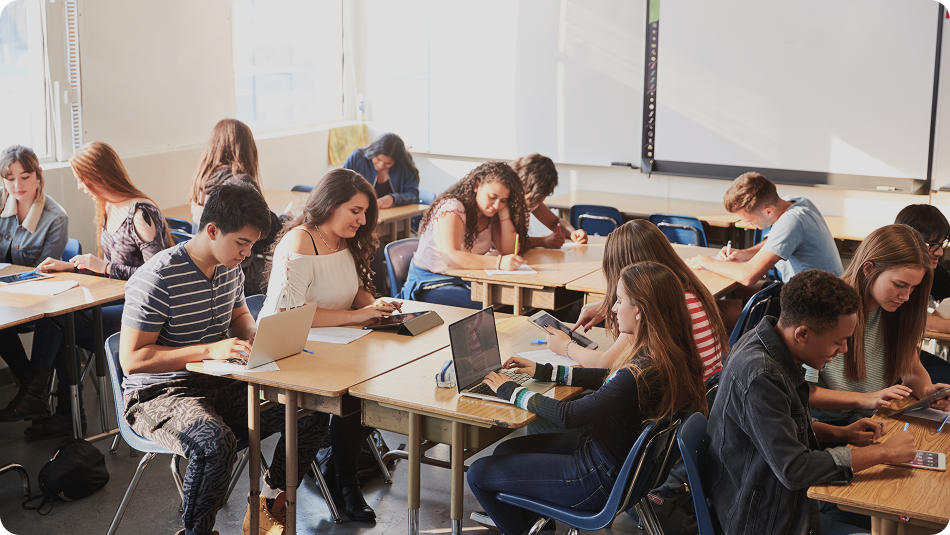
Teachers can participate right now by downloading the free Jebbee app or visiting the free platform to explore ready-to-use resources, including curriculum designed to embed career readiness and exploration directly into daily instruction for any subject. By integrating Jebbee Lesson Plans, CareerMatch™, SchoolMatch™, mentors, and Virtual CareerDay™ tools into classrooms, educators shift from constant recovery mode to purposeful preparation, replacing fatigue with momentum and outcomes with direction.
Start by exploring the curriculum library, selecting lessons that fit your department or school goals, and embedding them into units, advisory, or Tier 3 supports. Use Jebbee as a living resource for students to build profiles, track skills, and engage in structured career exploration that makes learning feel intentional again. You can also start your own group in Jebbee for you and fellow teachers and colleagues to communicate and share ideas. This is how transformation becomes tangible.